














NOVUS Releases Global Soybean Data, Highlights Risk Hidden in Poultry and Swine Diets
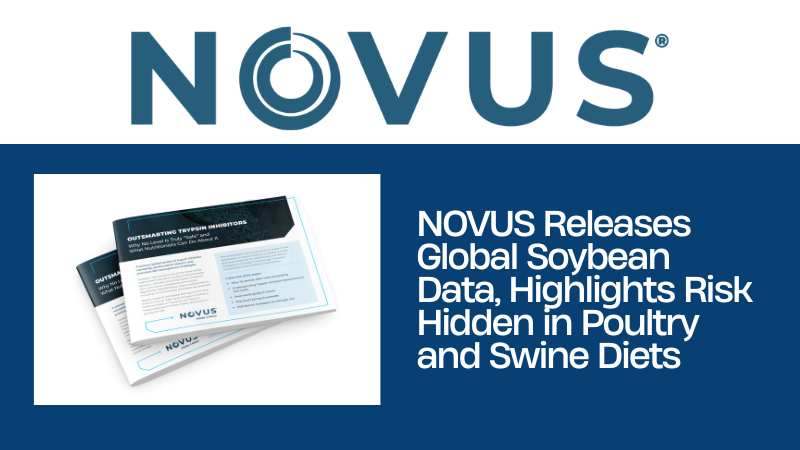
CHESTERFIELD, MO – Soybean meal is a mainstay of poultry and swine diets worldwide but variability in soybean quality creates hidden risks, both nutritionally for the animals and economically for producers. A new white paper from NOVUS draws on more than a decade’s worth of data to explain why trypsin inhibitor (TI) in soybean meal is a persistent and often underestimated challenge in modern feed formulation.
“Soybean meal is the greatest protein contributor in most diets, yet its nutritional value is often assumed rather than measured,” says Rasha Qudsieh, NOVUS global enzymes and microbials senior manager. “Our data from more than 1,900 soybean meal samples globally shows that trypsin inhibitor levels are highly variable across regions, years, and processing methods, and even small increases in TI can negatively impact amino acid digestibility, feed efficiency, and animal performance.”
Trypsin inhibitors are part of a plant’s natural defences that also interfere with protein digestion. While commonly associated with under-processed soy, NOVUS research found that TI can persist even in commercially processed soybean meal with measurable effects on gut health and growth in both poultry and swine. Read the full article here.